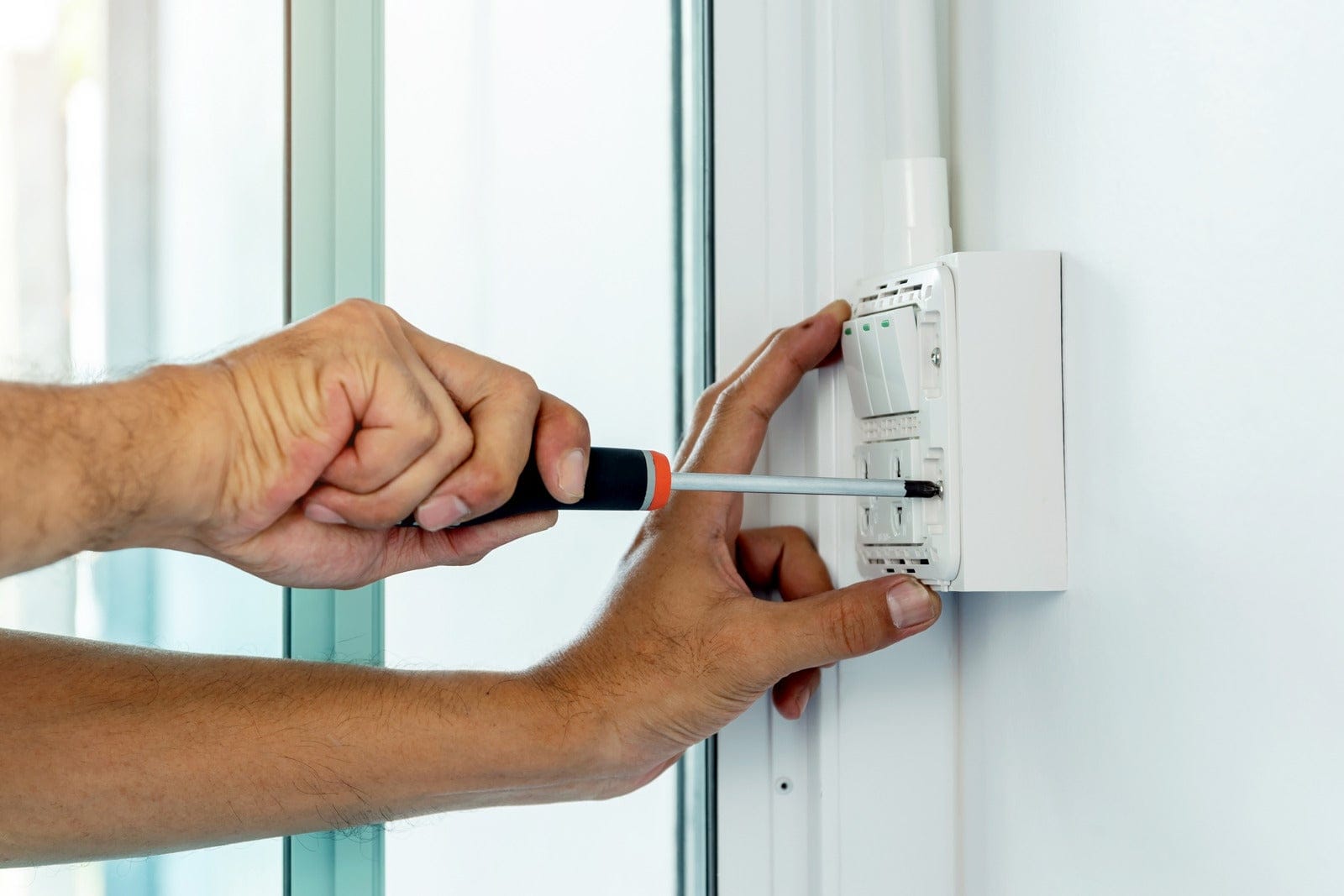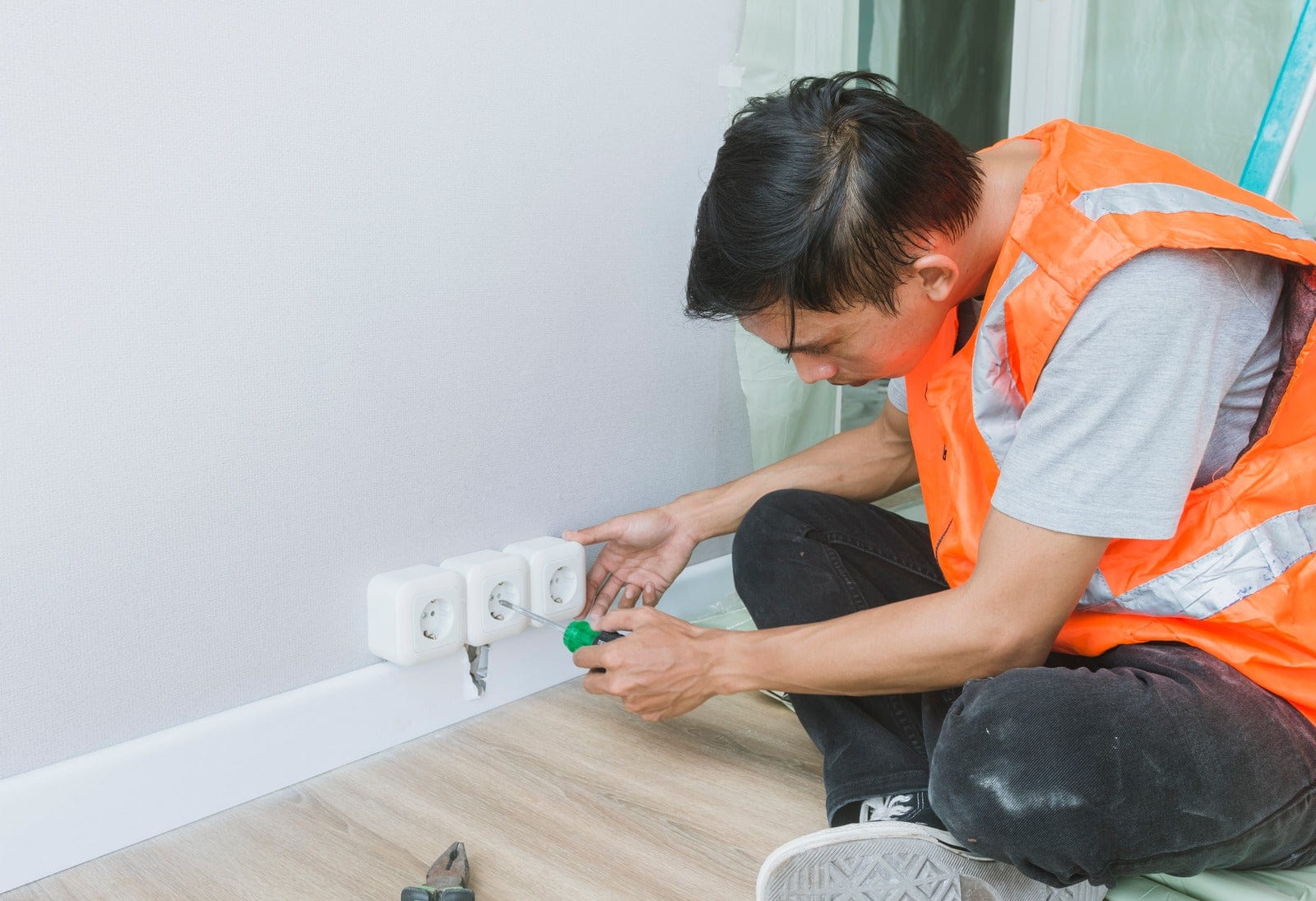
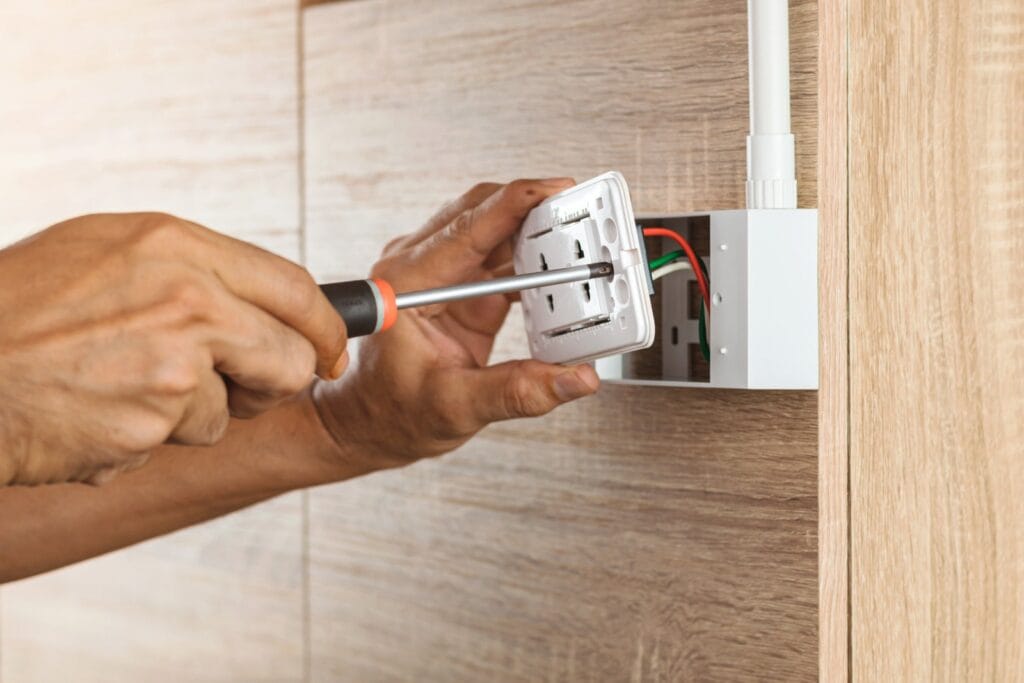
New outlet in the basement so the second TV doesn’t need an extension cord running across the floor. A dedicated plug for the home office setup that keeps tripping the current one. A dryer outlet that needs upgrading for the new machine. These sound like small jobs, the kind of thing that seems reasonable to handle with a YouTube tutorial and a trip to the hardware store. And sometimes it is that simple. Often it isn’t, and the gap between those two situations is exactly where plug installation problems tend to develop.
This post covers why professional plug installation matters more than it initially seems, what actually happens during a proper installation, and why the DIY version of this particular job carries more risk than most people account for going in.
Why This Job Isn’t as Simple as It Looks
Let’s be honest, connecting a few wires to an outlet doesn’t look complicated. Watch a video, match the colours, screw it in, done. The reality involves more variables than the surface-level version suggests.
Circuit capacity is the first thing that gets overlooked. Every circuit in a home has a rated capacity, and adding a new outlet means understanding what’s already drawing power from that circuit and whether the new load fits within safe limits. An outlet added without checking this creates a circuit that’s overloaded under normal use, which shows up as tripped breakers at best and overheated wiring at worst.
Wire gauge matching the circuit’s amperage is another detail that seems minor but genuinely matters. Using wire that’s undersized for the circuit it’s connected to creates a fire risk that isn’t visible from the outside once everything’s installed and the cover plate is back on.
Grounding, proper connections, and correct polarity all matter in ways that aren’t always obvious to someone doing this for the first time, and mistakes in any of these areas don’t necessarily show up immediately. They show up later, sometimes considerably later, when a specific condition finally triggers the problem that was actually created during a rushed DIY installation months earlier.
What Proper Electrical Plug Installation Actually Involves
A professional approach to this job includes steps that aren’t always obvious from outside the process.
Assessment of the existing circuit before any work begins, confirming what’s currently connected to it and whether adding a new outlet fits within safe capacity. This is the step most commonly skipped in DIY installations, partly because it requires understanding the home’s electrical panel and circuit layout in a way that isn’t intuitive without training.
Proper wire sizing matched to the circuit’s breaker rating, ensuring the connection can handle the actual current it will carry without generating excess heat. Correct grounding, since a properly grounded outlet is a genuine safety feature protecting against shock, not just a code technicality.
For outlets in specific locations, kitchens, bathrooms, outdoor spaces, anywhere near water, GFCI protection is required by code and exists specifically to prevent electrocution risk in environments where water and electricity are more likely to come into contact. Installing a standard outlet where a GFCI is required isn’t just a code violation, it’s removing a genuine safety mechanism from a location where it matters most.
Why DIY Plug Installation Carries More Risk Than People Expect
This deserves direct attention because the risk isn’t always obvious until something actually goes wrong.
A loose connection at an outlet generates heat during normal use. Over time, that heat can degrade the wiring insulation, and the situation can progress toward a genuine fire hazard without any obvious warning sign until it’s already a problem. This isn’t a dramatic, immediate failure in most cases. It’s a slow development that a homeowner has no way to monitor without specific knowledge of what to look for.
Incorrect wiring, reversed polarity specifically, can leave an outlet that appears to work normally for anything plugged into it, while creating a genuine shock hazard that isn’t apparent through normal use. Someone using the outlet has no way to know something’s wired incorrectly until, potentially, they experience a shock from touching something that shouldn’t be energized.
Overloading a circuit by adding an outlet without checking existing capacity creates recurring tripped breakers at minimum, and in cases where the circuit protection isn’t functioning correctly for some other reason, a genuine overheating risk at worst.
Permits and Why They Matter for Plug Installation
Depending on the scope of work, electrical plug installation may require a permit in Ontario, and this is worth understanding before assuming a project is too minor to bother with proper permitting.
New circuits, significant electrical additions, and work connected to specific appliances often fall into permitted work categories, even when the individual task, installing a plug, seems small in isolation. A licensed electrician handling plug installation in Ottawa handles this determination and the permit process as standard practice, removing the guesswork about whether a specific job requires it.
Unpermitted electrical work, even something as seemingly minor as an added outlet, creates the same downstream problems as any other unpermitted work. Complications with insurance claims. Disclosure issues at resale when a home inspection identifies electrical work that was never inspected by an independent authority.
Common Situations That Call for Plug Installation
A few specific scenarios come up regularly and are worth knowing about before deciding how to approach them.
Home office setups that have outgrown the original outlet capacity, particularly with multiple monitors, charging equipment, and other electronics all competing for the same circuit that wasn’t originally designed for this level of demand. Kitchen renovations that need additional outlets for modern appliance counts, since older kitchens were rarely wired for the number of small appliances a contemporary household actually uses.
Basement finishing projects that need outlets added throughout a previously unfinished space. Garage or workshop setups requiring dedicated circuits for power tools or equipment that draws considerably more current than standard household outlets are designed to handle. EV charger installation, which requires a dedicated high-amperage circuit that’s a completely different category of work from a standard outlet addition.
What to Expect From Professional Plug Installation in Ottawa
A proper service call starts with assessing the specific need, checking existing circuit capacity, and confirming what type of outlet and circuit configuration actually fits the intended use. From there, the work involves running appropriately sized wire, making proper connections at both the outlet and the panel if a new circuit is required, and testing the completed installation to confirm proper function, grounding, and where applicable, GFCI operation.
For anything beyond replacing an existing outlet on a like-for-like basis, involving electricians in Ottawa familiar with local permit requirements and current code standards removes the guesswork and the risk that comes with a well-intentioned but under-informed DIY attempt.
Final Thoughts
Professional plug installation matters because the visible part of the job, connecting wires to an outlet, is the easy part, while the parts that actually determine safety, circuit capacity, proper wire sizing, correct grounding, and code compliance, are considerably less visible and considerably easier to get wrong without specific training. Electrical plug installation that’s done properly protects against risks that don’t announce themselves until they’ve already become a real problem. For anything beyond the simplest like-for-like replacement, plug installation in Ottawa handled by a licensed professional is worth the cost difference compared to the risk of getting it wrong.
Frequently Asked Questions
Is professional plug installation actually necessary for a simple outlet replacement?
For a direct like-for-like replacement where the existing wiring and circuit remain unchanged, some homeowners handle this safely themselves with basic knowledge. For anything involving a new outlet, a new circuit, or a location requiring GFCI protection, professional electrical plug installation is strongly recommended given the safety considerations involved beyond just connecting wires correctly.
What are the risks of DIY plug installation compared to hiring a professional?
DIY installation risks include incorrect wire sizing, improper grounding, circuit overloading, and reversed polarity, all of which can create fire or shock hazards that aren't immediately obvious. These issues sometimes develop into problems gradually rather than failing immediately, making professional plug installation the safer choice for anything beyond simple replacements.
Does plug installation in Ottawa require a permit?
Depending on the scope, new circuits and significant electrical additions often require permits even when the individual task seems minor. A licensed electrician handling plug installation determines whether permitting applies and manages the process as standard practice, avoiding the complications that unpermitted electrical work can create with insurance and home resale later.
When does a location require GFCI protection for plug installation?
Kitchens, bathrooms, outdoor areas, and anywhere near water sources require GFCI protection by code, since these environments carry higher shock risk when water and electricity come into proximity. Electrical plug installation in these locations without proper GFCI protection removes a genuine safety mechanism, making professional installation particularly important in these specific areas.